Notice: Function _load_textdomain_just_in_time was called incorrectly. Translation loading for the js_composer domain was triggered too early. This is usually an indicator for some code in the plugin or theme running too early. Translations should be loaded at the init action or later. Please see Debugging in WordPress for more information. (This message was added in version 6.7.0.) in /home1/rrahim/public_html/hott93/wp-includes/functions.php on line 6131 Bees may struggle in winds caused by global warming, study finds – HOTT 93
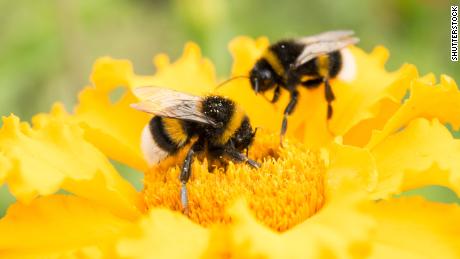
Bees may struggle in winds caused by global warming, study finds
Experiment revealed increased wind speeds reduced the efficiency of their foraging
With no wind bees took nectar from 5.45 flowers during 90 seconds, this fell to an average of 3.73 flowers when wind speed was increased.
A hardworking honey bee might feel aggrieved to be tricked into a garden shed to feed from a fake flower. Worse, she is blasted by a cheap household fan. And then timed to see how many fake flowers she can visit in 90 seconds.
But the honey bees’ tormentors are trying to help them: their ordeal is a controlled experiment that reveals how high wind speeds significantly reduce the efficiency of their foraging.
The bees, which usually feed on wild flowers after leaving their hives in the campus gardens, were lured into the shed with sugar water feeders. Only one bee was allowed in at a time, and their visits to artificial flowers were videoed and timed under different fan speeds, which mimicked calm and windy days.
With no wind, the bees on average took nectar from 5.45 flowers during their 90-second time trial. When wind speeds were increased, this fell to an average of 3.73 flowers. Over the course of a day, a bee’s capacity to supply its colony with food would be significantly curtailed.
Researchers also examined the indirect impact of higher winds by moving the flowers.
The findings reveal that, while flower movement did not appear to have an effect on the bees, the movement of air from the fans made them much more hesitant to take off from a flower, with time taken ranging from an initial 0.05 seconds to 54 seconds.
Georgia Hennessy, lead author of the research published in the journal Animal Behaviour, said that one possible reason for the wind causing hesitancy was that small increases in wind speed reduced the bees’ body temperature, so they require longer to warm up the flight muscles required to take off.
Another reason could be that the honey bees were waiting for a pause in the wind to take off, with gusty conditions occurring frequently in nature.
“We would expect that if it was a particularly windy summer the honey bees could be affected by it,” said Hennessy.
“With wind speeds predicted to increase in the years ahead, understanding how we can help pollinators in a changing climate is becoming ever more pressing. Although we can’t do much to control or stop the wind, we can take steps to minimise its impact on pollinators, such as placing hives in sheltered locations.”
The UN’s Food and Agriculture Organization warned last year that the decline in global bee populations was a “threat to global food security and nutrition”.
Dave Goulson, professor of biology at the University of Sussex, said: “Insect pollinators already face many pressures in the modern world, such as loss of habitat and exposure to pesticides, and a great many are in decline. Coping with increasingly blustery weather under climate change may be the final straw for some.”
We’re living up to our promise…
… to reduce the Guardian’s carbon footprint. In service of the escalating climate emergency, we have made an important decision – to renounce fossil fuel advertising, becoming the first major global news organisation to institute an outright ban on taking money from companies that extract fossil fuels.
The Guardian has pledged to give global heating, wildlife extinction and pollution the urgent attention and prominence they demand. That means changing the way we do our own business. In addition to turning down fossil fuel advertising, we’ve committed to becoming carbon-neutral by 2030 and divesting our Scott Trust endowment fund, which funds our journalism, from fossil fuel investment. The climate issue is the defining issue of our lifetime, and we realise the need to walk the talk in order to make a real difference.
We chose a different approach: to keep Guardian journalism open for all. We don’t have a paywall because we believe everyone deserves access to factual information, regardless of where they live or what they can afford to pay.
Our editorial independence means we are free to investigate and challenge inaction by those in power. We will inform our readers about threats to the environment based on scientific facts, not driven by commercial or political interests. And we have made several important changes to our style guide to ensure the language we use accurately reflects the environmental emergency.
byjeewan Deprecated: ltrim(): Passing null to parameter #1 ($string) of type string is deprecated in /home1/rrahim/public_html/hott93/wp-includes/formatting.php on line 4496